September 2026
Best Practices, Industry Insights, Retail/E-Commerce, Strategy
46 min read
Three out of four B2B buyers will switch to a competitor due to a poor online buying experience. Not a bad product. Not a bad price. A broken cart, a price that doesn’t match the contract, a phone call they shouldn’t have had to make in the first place. For years, that call counted as good service. A rep who picked up, an emailed price sheet, a quote turned around by the end of the day. That was the job. It isn’t anymore.
Buyers now research, compare, and often decide before a sales rep even enters the conversation, and they’re bringing consumer-grade expectations to every B2B purchase. When getting a catalog, a quote, or a price still requires a phone call, the brand isn’t providing service. It’s creating friction, and friction is where deals quietly die, usually before sales even knows there was a deal to lose.
Why Is Self-Service Now the Default B2B Buying Journey?
This didn’t happen overnight, but it’s accelerating faster than most sales teams can keep up with. Gartner’s survey found that 67% of B2B buyers now prefer a rep-free buying experience. A year earlier, that number was 61%. A six-point jump in twelve months isn’t a gradual drift. It signals that buyers are renegotiating the relationship in real time.
None of this means buyers have stopped valuing human expertise. What they’ve stopped tolerating is slow, inconsistent, low-value interaction that doesn’t actually move a deal forward. They still want a knowledgeable rep when they need one. What they don’t want is to be routed through a phone call for something a website should handle in ten seconds.
Some of this is generational, and it isn’t subtle. Millennial and Gen Z buyers now make up 71% of B2B purchasers, and they’ve never known a shopping experience that wasn’t Amazon-fast. They’re not asking B2B suppliers to reinvent anything. They’re asking them to catch up.
What Happens When Buying Still Requires a Phone Call?
The cost shows up quickly in switching data. Sana Commerce’s latest B2B e-commerce research puts it at 75%: three out of four buyers say they’d move to a supplier with a better online buying experience. That’s not a passive preference sitting in the back of someone’s mind. That’s a majority of the market with one foot out the door.
The more useful question is why they leave. McKinsey’s 2026 Global B2B Pulse Survey, which surveyed nearly 4,000 decision-makers across 13 countries, found that buyers now use an average of 10 channels during a single purchase. They expect the experience to follow them seamlessly from one to the next. If prices change, inventory disappears, or lead times don’t match across locations, confidence erodes quickly. Those inconsistencies are now among the top reasons buyers walk away.
Being everywhere isn’t the challenge anymore. The real challenge is making sure buyers get the same answer wherever they encounter your brand. When information changes from channel to channel, so does the buyer’s confidence in the purchase. And once that confidence is gone, the sale can be too.
What Does a Frictionless Storefront Require?
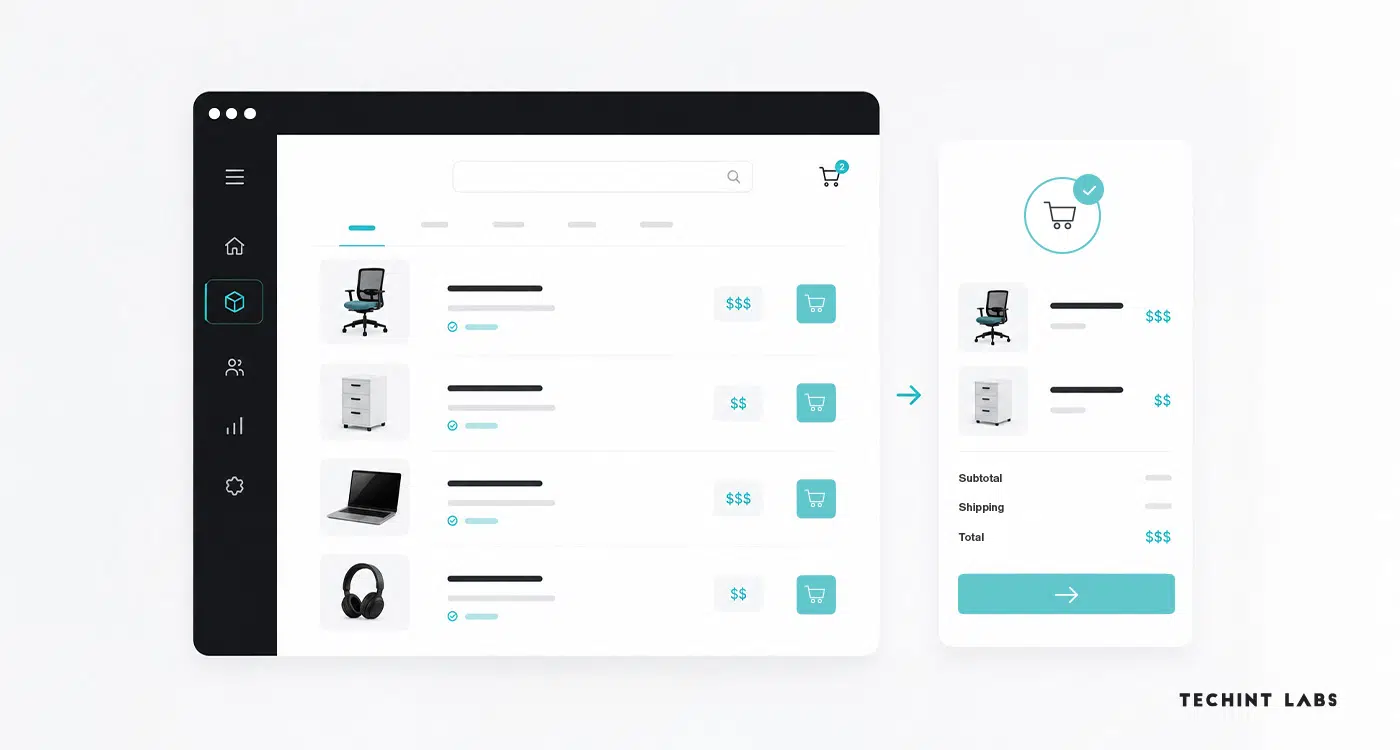
A frictionless storefront requires three components working as a single system: accurate inventory, personalized pricing, and integrated checkout. Buyer expectations have outpaced many storefronts, and closing that gap requires an infrastructure fix, not simply a cleaner homepage.
“The biggest mistake is treating digital commerce as a website project instead of a business systems project. A company can build a beautiful storefront, but if inventory, pricing, customer-specific terms, and order data still live in disconnected systems, the buyer experience will eventually break down. The goal shouldn’t just be to put products online. It should be to remove the friction from the entire buying process by connecting the storefront to the systems that already run the business.”

Adam Lee
Chief Business Development Officer
-
1
Does Your Catalog Show Real Inventory or Last Week's Inventory?
Your catalog should show real-time inventory pulled directly from the source system. Stale inventory creates friction before a buyer ever reaches pricing or checkout, and discovering that an item is out of stock after adding it to a cart can undermine months of relationship-building in a single click. Real-time inventory, pulled straight from the source system rather than refreshed in nightly batches, is table stakes. It is not a premium feature or a phase-two nice-to-have.
-
2
Is Pricing Personalized, or Does the Buyer Have to Ask?
Your storefront should automatically display each buyer's contract-specific pricing and volume discounts as soon as they log in. Buyers should not have to call a rep or wait for a response to see the pricing they have already negotiated. Sana Commerce's research reinforces this shift: negotiated pricing, real-time inventory, and self-service account management are no longer premium add-ons. They're the floor. If a returning customer has to ask a rep to confirm their own negotiated rate, the storefront has already failed at its job.
-
3
Can a Buyer Complete Checkout Without Leaving the Platform?
A buyer should be able to complete the entire purchase without leaving the storefront or switching between disconnected systems. Checkout needs to work seamlessly with inventory, pricing, and order data so buyers aren't forced to reconcile conflicting information or wait for systems to sync. When those systems operate as separate tools stitched together, buyers feel every seam. A price that contradicts what they were quoted or an order that stalls because two systems never sync can turn a streamlined purchase into a support ticket. A storefront is only as strong as its weakest handoff.
What Does a Great Experience Look Like for a Buyer in Practice?
Picture a returning buyer logging in to reorder a standard part. The catalog shows it in stock, so they add it to the cart. At checkout, the price doesn’t match the rate their company negotiated months ago because the storefront quietly pulls list pricing. At the same time, sales works off a separate spreadsheet nobody remembered to update. The buyer stops. They open a new tab, email their rep, and wait. The order that should have taken ninety seconds is now stuck in an inbox, and the buyer has learned something they won’t forget: this storefront can’t be trusted to get it right the first time.
That’s all it takes. One mismatched number sends a buyer straight back to phone-and-email ordering, and once that habit resets, it’s hard to undo. This is what an infrastructure problem actually looks like from the outside. Not a broken page. One disconnected data point quietly unraveling the entire self-service pitch.
Is Digital Commerce Now the Core of B2B Revenue, or Still a Side Channel?
It’s the core now, full stop. U.S. B2B e-commerce site sales grew 13% in 2025, reaching $2.93 trillion, according to Digital Commerce 360, even as total U.S. manufacturing and distribution sales inched up just 0.4%. That gap tells the real story. Overall demand barely moved. The share of it flowing through digital channels kept climbing regardless.
McKinsey’s 2026 Global B2B Pulse Survey confirms the pattern from a different angle: 71% of B2B companies now offer e-commerce, and among them, roughly a third of total revenue runs through digital channels, making it the single largest revenue source for many organizations. McKinsey calls this the survival threshold, and the phrase is well chosen. Capabilities that once separated digital leaders from everyone else have simply become the cost of staying in the conversation.
How Do You Build a Single-Source-of-Truth Storefront?
Diagnosing the problem is the easy part. Fixing it means unifying inventory, pricing logic, and checkout into one system pulling from a single source of truth, typically the ERP, instead of three disconnected tools duct-taped together after the fact.
The distinction sounds small until it isn’t. A storefront reading live from the ERP shows every buyer their actual contract price, stock levels, and order history the second they log in. A storefront layered on top of manual updates and spreadsheet exports will always be a step behind, and buyers find the gap fast, usually at the worst possible moment. This isn’t about a better-looking website. It’s about making sure sales, service, and self-service are all reading from the same page, every time, without exception.
“Operationally, it means every customer-facing system is working from the same trusted data. If a buyer sees a price online, the salesperson sees that same price, the ERP recognizes that price, and the order processes at that time. The same should be true for inventory, availability, customer terms, and order history. A single source of truth eliminates the manual reconciliation and conflicting information that creates friction for both the buyer and the internal team.”
Adam Lee
Chief Business Development Officer
Is Your Buying Experience Still Asking Buyers to Wait?
Before investing more in traffic or lead generation, take a quick look at where buyers may be getting stuck. Use the self-audit below to identify friction in the buying journey and compare the current experience with what a low-friction B2B buying experience could look like.
| Friction Point | Question | What Good Looks Like |
| Catalog access | Can buyers see the full product catalog and available inventory without contacting sales? | Buyers can find products, specifications, availability, and relevant details on their own. |
| Pricing | Can buyers see the right pricing, including negotiated rates, without waiting for a sales rep? | Pricing is personalized for the buyer and automatically displayed based on their account or agreement. |
| Checkout | Can buyers complete an order from start to finish on the platform? | Buyers can select products, review their order, submit payment or purchase details, and complete the transaction without switching channels. |
| Information Consistency | Does the same product, pricing, and account information appear across the website, sales team, and account portal? | Buyers get consistent, accurate information, regardless of where they interact with the business. |
What’s the Cost of Waiting to Fix Your Buying Experience?
The numbers already made the argument. Three out of four buyers say they’d switch for a better online experience. Inconsistent information across teams is now one of the top reasons they do. Digital channels already account for roughly a third of revenue for companies that offer e-commerce. Every month a storefront keeps running on stale data or disconnected systems is a month of that revenue quietly handed to whichever competitor’s buying experience just works. This isn’t a forecast. It’s a description of what’s happening right now to someone’s pipeline.
“I’d start by looking for friction in the buyer journey before assuming it’s a traffic or marketing problem. Can customers find what they need quickly? Is inventory accurate? Are they seeing the right pricing? Can they complete the transaction without calling, emailing, or waiting for someone internally? In B2B, conversion issues are often less about getting people to the storefront and more about whether the storefront allows them to finish what they came there to do.”
Adam Lee
Chief Business Development Officer
Are You Ready to Build a Frictionless Buying Experience?
A B2B storefront should make it easier to buy, not create another reason to call sales. Buyers should be able to find the right product, see the pricing that applies to them, check availability, and place an order without waiting for someone to fill in the gaps. That experience depends on what’s happening behind the storefront. When product, data, pricing, inventory, and checkout are connected, buyers get the information they need when they need it, and your sales team spends less time answering questions the system should handle.
Techint Labs helps B2B brands bring those pieces together, building the e-commerce infrastructure that turns a storefront into a reliable path to purchase. Schedule a meeting today to see how Techint Labs can support your buying experience.